ŠKODA AUTO Saves 160 Tonnes of CO2 Emissions Per Year with Shipping Container Loading Optimization
Transporting Air is Neither Economical nor Environmentally Friendly
From the logistics center in Central Europe, over 2,000 containers loaded with pallets of parts destined for vehicle assembly abroad are shipped daily. The carmaker handles the loading of the 78 cubic meter containers using manuals and the experience of its staff.
Performing this process manually, it was difficult for them to accurately and efficiently devise the ideal combinations of pallets to fill the full space on each shipping container, and they were only making use of 71 cubic meters per pallet.
Transporting unfilled containers, or "air", is uneconomical, and finding new pallet loading combinations was becoming increasingly complex. Workers needed to consider many factors, including the time required to load each pallet, as well as ensuring the right balance of different shapes of "optimal" and "suboptimal" pallets in each container.
Producing Optimal Pallet Combinations in 30 Seconds
Together with our strategic partner, Blindspot from the Adastra Group, we developed an intelligent system on the Microsoft Azure cloud ecosystem to optimize the container loading process. Workers can now easily use a tablet to determine the best possible method of fitting combinations of their 2,000 different pallet shapes into each 78 cubic meter container.
The system considers the dimensions and weight of, as well as the material on the pallets, and ensures that the total weight is correctly distributed in each container. The application can also check that the pallets loaded into the containers are the correct pallets to be transported each week.
Dispatching Five Fewer Fully Loaded Trainsets per Year
The project’s first phase, which included PoC and testing, was completed in just three months.
The entire system was deployed in the production environment a few months later in the same year, resulting in:
- Utilizing 3 more cubic meters per pallet (74 cubic meters in total)
- 30-second calculations for optimal pallet combinations
- Simpler detection of systemic packaging errors
- Easier training for new employees
Thanks to our solution, the client has optimized the shipping and logistics of their automotive parts and now dispatches five fewer fully loaded trainsets last year, saving approximately 160 tonnes of CO2.
"Together with our strategic partner Adastra AI we developed a system to solve our challenges with loading pallets into containers. Thanks to Adastra AI experts’ proactive and highly professional approach, we developed and deployed the algorithms considering all our needs and constraints related to loading in a short time."Petr Švarc, Head of AI Competence Centre, Skoda Auto
More Case Studies

Hyundai Saves 540 Thousand USD Annually with Optimized Production Scheduling and Paint Shop Operations
Smart scheduling algorithms eliminated paint shop inefficiencies and welding bottlenecks across a 1,400-vehicles-per-day production line, delivering $540,000 in annual savings with a 3-month ROI.

AI Cuts Čepro's Monthly Planning Time from Days to Hours
Čepro needed to modernise complex pipeline and railway logistics planning. Blindspot's AI application now automatically generates comprehensive hourly schedules and dynamically replans when disruptions occur — slashing what took days down to hours.
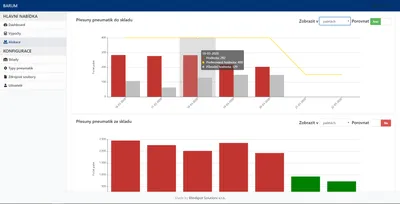
Smart Algorithm Significantly Reduces Inter-Warehouse Transportation Costs
Continental Barum produces over 20 million tires annually. Blindspot analysed historical order and dispatch data to build an algorithm that recommends optimal storage locations — eliminating unnecessary inter-warehouse transfers and significantly cutting logistics costs.
Want to be Our Next Success Story?
Our team of AI engineers and domain experts will work with you to understand your challenge, design a solution, and deploy it to production.